


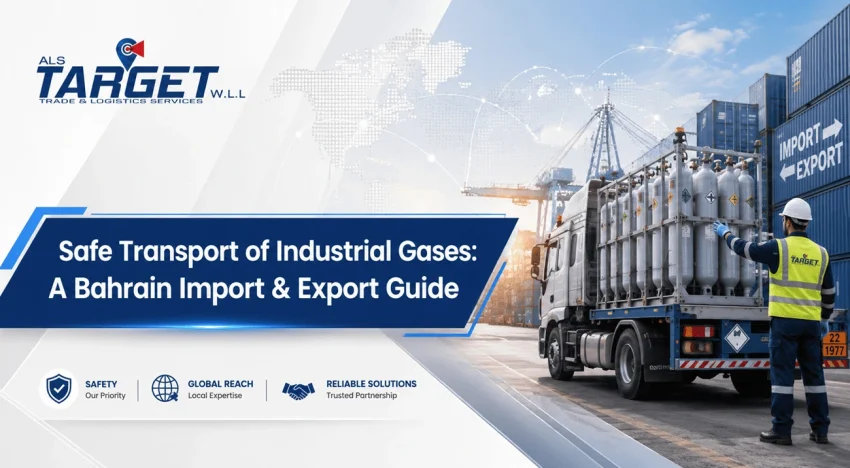
Industrial gases contribute in one way or another to nearly each of the main sectors in Bahrain. Oxygen for cutting is used by fabricators, medical gases by hospitals, carbon dioxide is handled in food processors, while acetylene and shielding gases are routinely used on construction sites. But these are no regular products.
Dangerous goods include those that’s compressed, liquefied, in a refrigerated or dissolved state in Class 2. As a result, incorrect declaration, leaking cylinder, improperly labelled gas or incorrect vehicle can rapidly turn into a dangerous health and safety issue.
When it comes to ensuring the safe movement of goods, Bahrain importers and exporters know that this process begins long before their cargo reaches a port, an airport, a warehouse or border gate. Accurate classification, approved packaging, the correct documents, trained staff and a carrier that knows how to efficiently handle logistics involving dangerous goods in Bahrain.
The following guide covers the top risks, classifications and shipping requirements that businesses need to be aware of when transporting industrial gas cylinders, cryogenic gases and other regulated gas products.
Why Are Industrial Gases Classified as Dangerous Goods?
A gas is pointwise stable while it exists in its cylinder. However there also potential hazards associated with its transport including high pressure, extreme cold and flammability, toxicity or oxidising properties.
Even an inert gas can cause oxygen displacement inside a closed trailer or storage room. Similarly, during an impact a cylinder valve can fail and turn the cylinder into a fastmoving projectile.
Gases normally fall within the Dangerous Goods Class 2 under international standards for dangerous goods. The translation of this class includes compressed gases (specifically, dissolved gases and liquefied gases), refrigerated liquefied gas tank containers, gas mixtures and finally certain pressurized aerosol packages.
The International Maritime Dangerous Goods Code regulates the transport of dangerous goods in packaged form by sea. It includes classification, packing, container loading, stowage and marking & segregation. The IMDG Code 2024 Edition (Amendment 42-24) enters into force on 1 January 2026 as an obligatory instrument.
Likewise, air shipments must adhere to airline requirements based on the IATA Dangerous Goods Regulations, which specify minimum standards for classifying, packing (and creating the associated documentation), marking and labelling hazardous air cargo. Get details on Import Cargo Storage Services in Bahrain.
Understanding the Three Class 2 Divisions
Class 2 dangerous goods are divided according to their main hazard.
| Division | Main hazard | Common industrial examples | Typical concern |
| 2.1 | Flammable gas | Acetylene, hydrogen, propane, LPG | Fire, flashback or explosion |
| 2.2 | Non-flammable, non-toxic gas | Nitrogen, argon, helium, compressed air | Pressure release and oxygen displacement |
| 2.3 | Toxic gas | Chlorine, sulphur dioxide, certain ammonia shipments | Poisoning, inhalation injury and environmental release |
A gas may also have a subsidiary hazard. For example, oxygen is not itself flammable, yet it strongly supports combustion. Consequently, oxygen cylinders must remain away from oils, greases, fuel gases and combustible material.
Importers should never classify a shipment simply by using the product’s commercial name. Instead, they should confirm its:
- Proper Shipping Name
- UN number
- hazard division
- subsidiary risk
- packing instruction
- quantity limitations
- emergency response information
The shipper normally carries responsibility for correct classification when dangerous goods move by air.
Common Industrial Gases Imported or Exported Through Bahrain
Bahrain’s manufacturing, healthcare, oil and gas, marine, food and construction sectors use a wide range of regulated gases.
| Industrial gas | Common application | Typical transport concern |
| Oxygen | Welding, healthcare and metal cutting | Oxidising effect and high pressure |
| Acetylene | Welding and flame cutting | Highly flammable; requires secure upright handling |
| Nitrogen | Purging, blanketing, food packing | Asphyxiation risk in enclosed spaces |
| Argon | Welding and metal fabrication | High pressure and oxygen displacement |
| Carbon dioxide | Food, beverages, refrigeration | Pressure and suffocation risk |
| Hydrogen | Refining, laboratory and energy use | Very high flammability and easy leakage |
| Helium | Medical, laboratory and technical uses | High-pressure cylinder handling |
| Chlorine | Water treatment and industry | Toxic inhalation hazard |
| Ammonia | Refrigeration and industrial processing | Toxicity, corrosive effects and pressure |
| LPG | Heating and industrial operations | Flammable vapour and explosion risk |
The exact transport description depends on the gas concentration, physical condition, cylinder type and intended shipment method. Therefore, two products with similar commercial names may require different declarations. Looking for a Bonded Warehouse Rental in Bahrain?
Documents Bahrain Importers and Exporters Should Prepare
Documentation errors remain one of the most common causes of delayed dangerous-goods shipments. In addition, incomplete paperwork may cause a carrier to reject the cargo before loading.
A typical industrial gas import or export shipment may require:
- Commercial invoice
- Packing list
- Bill of lading or air waybill
- Certificate of origin
- Import or export declaration
- Safety Data Sheet, or SDS
- Dangerous Goods Declaration
- Product specifications
- Cylinder inspection or test records, where applicable
- Relevant permits or approvals
- Emergency contact details
- Transport or delivery order
For air cargo, the consignor must prepare a declaration confirming that the shipment has been packed, marked, labelled and declared according to the applicable IATA requirements.
The Safety Data Sheet should match the actual product being shipped. Using a generic SDS for a different gas mixture can lead to incorrect classification. Moreover, the trade invoice, packing list, cylinder labels and dangerous-goods declaration should all show consistent information.
Packaging and Cylinder Safety Requirements
Industrial gas packaging involves far more than placing cylinders inside a container. The cylinder, valve, closure and protective equipment must suit the gas and its operating pressure.
Before dispatch, the shipper should inspect each cylinder for:
- corrosion
- dents or impact damage
- valve leakage
- damaged threads
- missing protective caps
- illegible markings
- expired inspection dates
- signs of heat or fire exposure
A cylinder with an uncertain service history should not enter the supply chain. Also, workers must never repair, repaint or relabel cylinders in a way that hides mandatory identification marks.
Cylinders should normally remain secured against movement. Depending on the product and approved handling method, they may need upright positioning, valve protection and separation from heat sources.
Refrigerated liquefied gases need additional controls because they create cryogenic hazards. Contact may cause severe cold burns, while vaporisation can rapidly increase pressure or reduce oxygen levels. Get details on 3PL Bonded Warehousing Services in Bahrain.
Marking, Labelling and Placarding
Every regulated package must communicate its hazards clearly. The required information may include:
- UN number
- Proper Shipping Name
- Class 2 hazard label
- subsidiary-risk label
- orientation arrows, where required
- shipper and consignee details
- overpack markings
- handling instructions
Cargo transport units may also need placards on their outer surfaces. However, the exact placarding arrangement depends on the shipment, transport mode, package type and applicable regulations.
Labels should remain visible, durable and weather resistant. A faded diamond label or handwritten UN number may not be accepted. Furthermore, old labels from a previous cargo should be removed or completely covered to avoid confusion.
Sea Freight Versus Air Freight for Industrial Gases
Both shipping modes can move certain gases, yet their operational requirements differ considerably.
| Factor | Sea freight | Air freight |
| Governing framework | IMDG Code | ICAO technical requirements and IATA DGR |
| Capacity | Better suited to larger quantities | Usually restricted by quantity and aircraft limitations |
| Cost | Generally more economical for bulk movements | Higher due to specialist handling |
| Transit time | Longer | Faster |
| Carrier acceptance | Depends on vessel and shipping line policy | Depends on airline and aircraft type |
| Documentation | Dangerous Goods Declaration and shipping papers | Shipper’s Declaration where required |
| Suitability | Cylinders, tanks and larger commercial consignments | Urgent, approved, limited shipments |
Although sea freight often suits commercial gas volumes, not every shipping line accepts every Class 2 product. Some carriers impose stricter conditions than the minimum regulatory rules.
Air freight presents even tighter limitations. Certain toxic, flammable or cryogenic gases may face aircraft restrictions or complete carrier refusal. Dangerous goods by air should normally be prepared by personnel with suitable qualifications and training.
Therefore, the exporter should obtain written carrier acceptance before moving cylinders to the terminal. Looking for a Bonded-to-Bonded Warehousing Services in Bahrain?
Segregation of Incompatible Industrial Gases
Poor segregation can turn a minor leak into a major incident. For example, oxidising gases should not sit beside flammable gases without the required separation.
Key segregation considerations include:
- oxygen away from acetylene, LPG and other fuel gases
- toxic gases away from food, pharmaceuticals and consumer cargo
- cylinders away from ignition sources
- gas packages away from corrosive substances that could damage containers
- refrigerated gases away from unsuitable enclosed spaces
- damaged or leaking cylinders isolated immediately
The IMDG Code contains detailed stowage and segregation requirements for incompatible dangerous goods.
Importers should also plan segregation after customs clearance. Safe port handling alone is not enough when the receiving warehouse stores oxygen and fuel-gas cylinders in the same uncontrolled area.
Road Transport and Final Delivery in Bahrain
The final journey from Bahrain’s port or airport to the consignee deserves the same attention as international carriage.
A suitable vehicle should provide secure cylinder restraints, ventilation and protection against excessive heat. Additionally, the route plan should consider traffic, delivery restrictions, emergency access and unloading conditions.
Drivers and handlers should know:
- what gas they are carrying
- the main hazards
- where the emergency information is located
- how to identify leakage
- who to contact during an incident
- what actions they must avoid
A driver should not attempt to control an unknown toxic-gas leak without proper equipment and training. Instead, the priority should be isolation, public safety and immediate communication with emergency responders. Get details on Re-Export Cargo Warehousing Services in Bahrain.
Frequent Mistakes Made by Importers and Exporters
Several avoidable mistakes can delay or endanger an industrial gas shipment.
Using the Wrong UN Number
A company may declare “compressed gas” without confirming the gas mixture or physical condition. As a result, the entire shipment may use an incorrect transport description.
Booking Cargo Before Checking Carrier Acceptance
A freight booking does not always mean final dangerous-goods approval. The shipping line or airline may still reject the consignment after reviewing its declaration.
Shipping Cylinders With Expired Test Dates
Even when the gas itself meets specification, an unapproved or out-of-test cylinder may not qualify for transport.
Mixing Full and Empty Cylinders
An “empty” cylinder may still contain dangerous pressure or residue. Therefore, never treat it as harmless scrap unless the applicable conditions for empty packaging have been met.
Ignoring Temperature Exposure
Bahrain’s hot climate can increase pressure inside gas cylinders. Cylinders should not remain for long periods inside unventilated vehicles or exposed storage areas.
Allowing Untrained Staff to Prepare Documents
A minor typing error in a Proper Shipping Name, quantity or packing instruction can trigger rejection. Training matters because the shipment details need technical accuracy, not guesswork.
Related Services:
» Bonded Warehousing for Retail Cargo in Bahrain
» Bonded Warehousing Near Khalifa Bin Salman Port
» Warehousing & Storage Services in Bahrain
» Land Freight Service in Bahrain
» Bahrain to Abu Dhabi Land Transport Service
A Practical Pre-Shipment Checklist
Before handing industrial gases to a carrier, confirm the following:
| Checkpoint | Question to ask |
| Classification | Is the UN number and Proper Shipping Name correct? |
| Safety data | Does the SDS match the exact product and concentration? |
| Cylinder condition | Are cylinders tested, undamaged and leak-free? |
| Packaging | Is the packaging approved for the gas and pressure? |
| Labels | Are hazard labels and UN markings visible? |
| Segregation | Are incompatible gases or goods separated? |
| Documents | Do all documents show matching descriptions and quantities? |
| Carrier approval | Has the airline or shipping line accepted the cargo? |
| Personnel | Have trained staff prepared and checked the shipment? |
| Delivery | Is a suitable vehicle and unloading area available? |
| Emergency planning | Are emergency contacts and response details accessible? |
| Storage | Can the consignee safely receive and store the gas? |
How ALS TARGET Supports Dangerous Goods Logistics in Bahrain
Moving industrial gases requires coordination between the supplier, importer, customs representative, carrier, terminal, haulier and receiving facility. One missing approval can affect the whole movement.
ALS TARGET supports businesses with freight planning and dangerous goods logistics in Bahrain, including coordination for suitable transport options, shipment documentation and delivery arrangements.
Early planning remains essential. Ideally, the importer or exporter should provide the SDS, gas name, UN number, cylinder quantity, package details, origin, destination and preferred transport mode before requesting a final quotation.
That information allows the logistics team to check feasibility, carrier acceptance and handling conditions in advance. Consequently, businesses can reduce avoidable storage charges, rejected bookings and compliance problems.
Related Articles:
» Bahrain Logistics Solutions: Seamless Air Freight, Sea Freight & Warehousing
» Best Freight Forwarders for Jeddah → GCC Trucking
» Incoterms for Jeddah Route: CIF, FOB, DDP for GCC Importers
» Jeddah Port Customs Documents Checklist for US & EU Exporters
» Bahrain Checklist for Urgent Commercial Cargo in Air Freight
Safe Handling of Industrial Gases Starts with Compliance
While industrial gases may keep Bahrain’s vital industries in motion, they require stringent handling from origin to end-use. So, the safest shipment starts with correct classification and ends with controlled stockpiling at consignee premises.
Importers and exporters should never take comfort in traditional product nomenclature or past import history. Regulations shift, carrier policies vary and every gas has its own dangers.
Therefore businesses should confirm the rules in place today, use trained staff and partner with an experienced dangerous goods freight forwarder in Bahrain. When properly planned, complex Class 2 cargo can still be moved legally and safely without putting it back in front of the Provisional Government.
FAQs: Industrial Gases in Dangerous Goods: Bahrain Importers and Exporters
Class 2 dangerous goods mainly comprise industrial gases that are compressed, liquefied, dissolved and refrigerated. But, the classification varies with gas and its concentration, pressure and physical form.
Yes, an up-to-date Safety Data Sheet is normally essential. It provides hazard, composition, handling, storage and emergency information needed for classification and transport planning.
ALS TARGET can assist with freight coordination, documentation planning, carrier communication and delivery arrangements for compliant industrial gas transportation in Bahrain, subject to the cargo’s classification and acceptance requirements.