


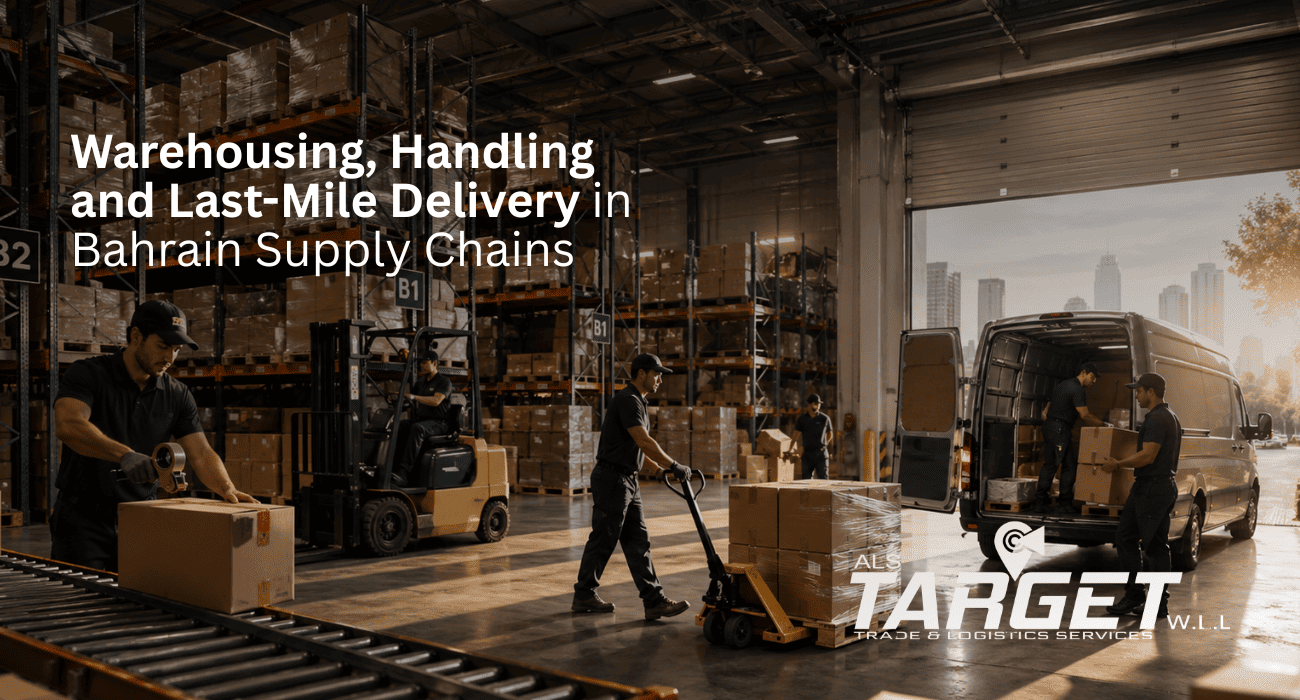
It has not been globally trumpeted yet، but Bahrain has quietly become one of the most effective logistics hubs in all the Gulf. Its geographical location where Asia meets Europe and the Middle East makes it a natural trading hub. But it is the interlocked choreography of warehousing, material handling and last-mile delivery that actually places the muscle in supply chain performance here.
In this article, we explore how these three pillars are meshing together, the hurdles that remain for each of them, and why businesses need to adapt their logistics strategies now in order to stay with the pace of competition.
The Growing Importance of Supply Chains in Bahrain
Logistics in Bahrain has been transformed by the emergence of e-commerce and digital retail. Now, faster deliveries, better tracking and flexible storage are table stakes—not optional. Industry insights say logistics in Bahrain revolves around facilitating swift movement of goods at a low cost while keeping customer expectations intact.
In addition, the rapid growth of online retail is creating high demand for last-mile delivery solutions which may facilitate one of the most significant steps in a supply chain. Get details on Air Freight Service in Bahrain.
What is Warehousing in Bahrain Supply Chains?
The definition of Warehousing is the safe storage of goods before their distribution. No longer are warehouses mere storage spaces in a place like Bahrain, but intelligent distribution centers.
Modern facilities offer:
- Real-time inventory tracking
- Temperature-controlled environments
- Automated picking and packing systems
- High pallet storage capacity
For instance, large logistics providers operate facilities with over 20,000 pallet capacity and millions of units handled annually, showing how scalable warehousing has become.
Key Functions of Warehousing
| Function | Description | Impact |
| Inventory Control | Tracks stock levels in real-time | Reduces stockouts |
| Order Fulfillment | Picking, packing, dispatch | Faster delivery |
| Consolidation | Combining shipments | Lower costs |
| Storage Optimization | Efficient space usage | Higher productivity |
Material Handling: The Backbone of Efficiency
Material handling helps the goods move to and throughout the warehouse, which is primarily a store. These processes include loading, unloading, sorting, packing and internal transport.
Bahrain is handling systems, driven by technology. Companies use:
- Conveyor systems
- Forklifts and pallet jacks
- Barcode and RFID tracking
- Automated sorting systems
These innovations reduce errors and improve speed, which is crucial for industries like pharmaceuticals and e-commerce.
Why Handling Matters
Poor handling can lead to:
- Damaged goods
- Delayed shipments
- Increased operational costs
Efficient handling operations, however, enhance flow and help ensure customer satisfaction. Looking for a Sea Freight Service in Bahrain?
Last-Mile Delivery: The Final and Most Critical Step
Last mile delivery is when the products need to be transported from warehouse or distribution center to your doorstep. So the most expensive and complex step of logistics it is.
The objective is simply to make sure packages reach there a little bit faster, more accurately and at less cost.
Key Features of Last-Mile Delivery in Bahrain
Same-day and next-day delivery options
- GPS-enabled tracking systems
- Electronic proof of delivery
- Multi-vehicle fleets (bikes, vans, cars)
The market has become so competitive that now companies in Bahrain offer delivery periods within hours for urban customers.
Integration of Warehousing and Last-Mile Delivery
A strong supply chain connects storage with delivery seamlessly. Without integration, delays and inefficiencies occur.
Integrated Supply Chain Flow
- Goods received at warehouse
- Inventory stored and tracked
- Orders processed and packed
- Shipments dispatched for delivery
- Final delivery to customer
This end-to-end system ensures faster turnaround and better customer experience. Get details on Land Freight Service in Bahrain.
Technology Transforming Bahrain Logistics
Technology is reshaping logistics operations across Bahrain. Businesses now rely on:
- Real-time tracking systems
- Warehouse management systems (WMS)
- Route optimization software
- AI-driven demand forecasting
They increase transparency, decrease mistakes and fasten the delivery. Logistics providers also utilize these analytics dashboards to track their Key Performance Indicators (KPIs) and forecast delays.
Challenges in Bahrain Supply Chains
Despite the advancements there are still some challenges (See below):
1. Delivery Delays
Delivery delays can be caused by two common problems: traffic congestion and address accuracy.
2. High Last-Mile Costs
Normally, the last mile delivery is the most expensive logistics link.
3. Handling Errors
Goods are being damaged due to improper packaging or sorting.
4. Seasonal Demand Fluctuations
The peak seasons squeeze the warehousing and delivery networks.
Opportunities for Growth
Bahrain offers strong growth potential in logistics due to:
- Government support for economic diversification
- Expansion of e-commerce
- Strategic geographic location
- Advanced infrastructure
Businesses investing in smart warehousing and automated delivery systems are likely to gain a competitive edge.
Comparison: Traditional vs Modern Supply Chains
| Aspect | Traditional Supply Chain | Modern Bahrain Supply Chain |
| Warehousing | Manual storage | Automated & tech-enabled |
| Handling | Labor-intensive | Mechanized & tracked |
| Delivery | Slow, fixed schedules | Fast, flexible, same-day |
| Tracking | Limited visibility | Real-time updates |
| Customer Experience | Basic | Highly responsive |
Best Practices for Efficient Logistics in Bahrain
In order to make it big in Bahrain logistics, organisations should:
- Automate and Digitalize Investments
- Optimize warehouse layouts
- Use data for demand forecasting
- Partner with reliable logistics providers
- Focus on customer-centric delivery models
Future Trends in Bahrain Supply Chains
The future of logistics in Bahrain will likely include:
- Drone deliveries
- Autonomous vehicles
- Smart warehouses using AI
- Sustainable logistics practices
As customer expectations grow, supply chains must evolve continuously.
Related Articles:
» Shipping Dangerous Goods from Bahrain: What Businesses Should Check First
» Door-to-Door Cargo Services in Bahrain: How the Process Works
» Bahrain to Saudi Logistics: Why Cross-Border Trucking Still Matters
» Commercial Cargo Shipping in Bahrain: Air, Sea, or Land—Which Mode Fits Your Business?
» Urgent Shipments in Bahrain: How Air Freight Handles Time-Critical Cargo?
Enhancing Efficiency in Bahrain’s Supply Chain Operations
An integral part of every supply chain ecosystem in Bahrain, warehousing is one major category to look out for. Warehousing helps with correct storage and management allows for seamless coordination between the flow of goods to the end consumers, whereas last mile delivery ensures that businesses are able to reach out to their customers directly.
Together these create a more seamless logistics from one end to another leading to better economic growth and customer satisfaction. The ones that continue to lean into technology and integration are the companies that will not only survive, they will dominate an economy reset.
FAQs: Warehousing, Handling, and Last-Mile Delivery in Bahrain Supply Chains
Warehousing — This involves storage of goods before they are distributed to customers or retailers.
It is the final stage of shipment and one which directly influences customer satisfaction.
They have delivery delays, expensive fees and problematic handling.
It allows real time tracking, automation and informed decision making.
That may involve moving, storing, and controlling warehouse goods.
Yes many logistics providers offer same day or even within a few hours.
Because this is a necessity for multiple industries such as retail, e-commerce, and pharma and food.
Including by increasing warehouse efficiency through smart routes and automation.
A software that enables and establishes a great management of your inventory, storage and order fulfillment.
This raises the need for more fast and reliable delivery service.
The managing movement of temp-sensitive products such as food and pharmaceuticals.
Automation, AI and sustainable solutions — The future would depend essentially on these fields.