


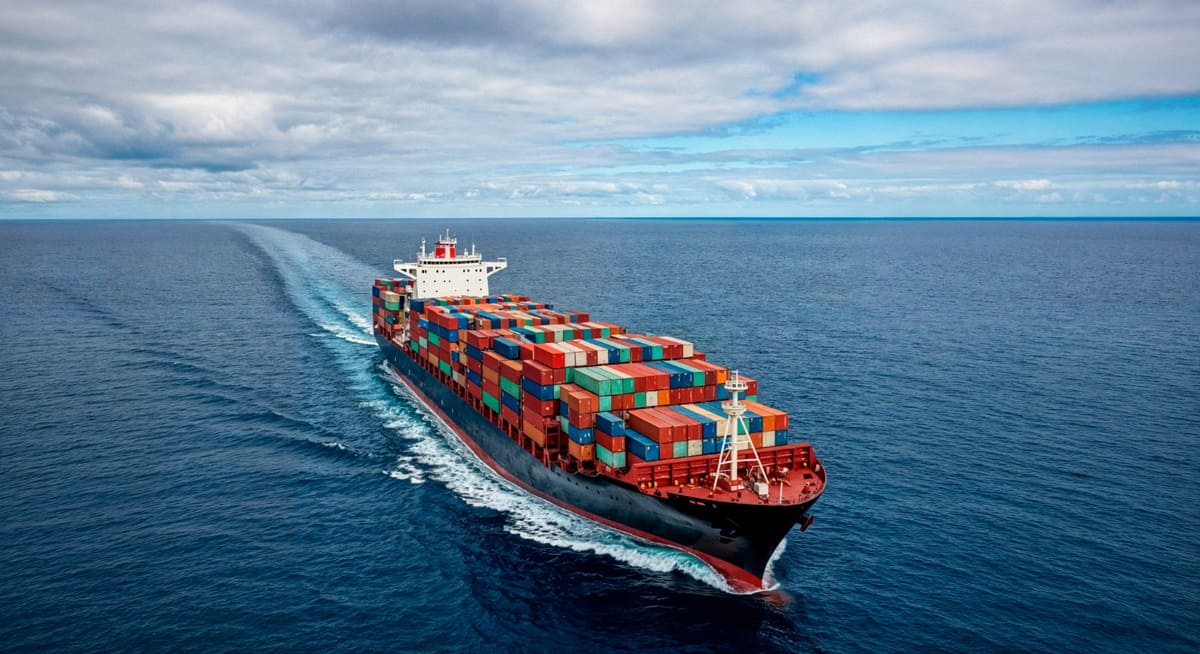
So when companies plan sea freight for Bahrain, one of the first questions would typically be FCL or LCL? Both methods move cargo by sea, at least at first glance, so they can seem awfully similar. However, when you consider cost, timing, cargo safety and supply chain control, the difference is stark.”
Importers and exporters trading with Bahrain should pay extra attention to this choice. Bahrain’s logistics landscape caters to both containerised cargo as well as general cargo, supplemented with port services — so companies can make practical choices based on their shipment size and time sensitivity. But the right booking model varies depending on what you ship, how frequently you ship, and how much flexibility your business requires.
At ALS TARGET, we provide businesses with a practical lens to compare FCL vs LCL shipping. Rather than deciding based solely on headline freight rates, innovative shippers consider the total landed cost, potential delays, handling of cargo and stock planning. That method tends to save more money over the long term.
What Does FCL Mean in Sea Freight?
FCL (Full Container Load) means you book an entire container for your cargo. Even if you do not fill every cubic metre, the container is reserved for your shipment alone.
This option suits businesses that:
- move high cargo volumes,
- ship regularly,
- handle fragile or high-value goods,
- or want better control over packing and transit.
FCL shipping to Bahrain means that your goods are packed only once, sealed and moved through the supply chain with a minimum of points of contact. Consequently, the risk of handling damage generally decreases. Also, customs processing and delivery planning may seem simpler because there’s typically one container per shipper. Get details on Sea Freight Service.
What Does LCL Mean in Sea Freight?
LCL (Less than Container Load) indicates your cargo is collected together in the same container as other shippers. You only pay for the volume you use, rather than the entire container.
This option works well for businesses that:
- ship smaller loads,
- do not need a full container,
- want to reduce upfront freight spend,
- or are testing a new market.
LCL shipping to Bahrain can be a wonderful starting point for smaller importers and exporters. This gives you an opportunity to ship goods without having to wait until you have enough products for a full container. So, it might help with cash flow and flexible inventory, particularly for seasonal or low-volume trade.
FCL vs LCL: The Main Difference
The biggest difference between FCL and LCL is simple: one gives you a full container, while the other gives you shared space.
Still, the real decision goes deeper than that.
| Factor | FCL | LCL |
| Container use | Exclusive use | Shared with other shippers |
| Best for | Large shipments | Small shipments |
| Handling | Lower handling frequency | More handling points |
| Transit predictability | Usually more stable | Can involve consolidation delays |
| Cost structure | Better value for bigger loads | Better for lower volumes |
| Cargo privacy | Higher | Lower |
| Risk of damage | Generally lower | Usually higher due to shared handling |
When FCL Is the Better Choice
Hence in many situations as cargo volume increases, it becomes better to move FCL freight to Bahrain. As your shipment increases in scale, it may be cheaper to pay for the full box than line up LCL consolidation charges through multiple cubic metres.
FCL tends to be a better choice for you if:
1. You ship in bulk
FCL usually works out better overall if you are moving machinery / furniture / retail stock / building materials, or palletised goods in larger amounts.
2. You need better cargo protection
There’s less unpacking, repacking and repositioning because the container is dedicated to your goods. That counts for fragile, branded or high-value goods.
3. You want smoother delivery planning
FCL can support tighter warehouse planning because there are fewer consolidation steps. So, if your business depends on predictable receiving dates, FCL often helps.
4. You ship regularly
Frequent exporters and importers often benefit from consistent FCL bookings because they simplify logistics management over time. Get details on Air Freight Service.
When LCL Makes More Sense
On the other hand, LCL sea freight to Bahrain makes excellent sense for businesses that want flexibility.
1. Your cargo volume is low
If you only have a few cartons, loose cargo, or several pallets, paying for a full container may not be practical.
2. You want to protect cash flow
LCL lets you ship smaller quantities more often. As a result, you can avoid over-ordering just to fill a container.
3. You are testing demand
Many new importers use LCL while checking whether a product will perform well in Bahrain’s market.
4. You do not need urgent delivery
LCL often involves consolidation at origin and deconsolidation at destination. Therefore, transit can feel slower than FCL, even if the vessel route is similar.
Cost Considerations: FCL vs LCL to Bahrain
Many companies assume that LCL is always more affordable. That is not always true.
While at the booking stage, an LCL shipment might appear less expensive as you only pay for the volume of space utilized. However, additional charges — origin handling, destination handling, consolidation, deconsolidation, documentation and storage — can be considerable.
By contrast, costs will be higher upfront for an FCL (full cargo load). But as your shipment volume grows, the price per unit is generally more competitive.
Here is the practical rule:
- Small cargo = LCL often wins
- Bigger cargo = FCL often wins
That said, the smartest comparison is never just freight rate versus freight rate. You should compare:
- freight cost,
- handling charges,
- customs-related workflow,
- inland transport,
- delivery urgency,
- and possible delay costs.
Transit Time and Reliability
If you have scheduling concerns, FCL shipping tends to be more predictable. Because your cargo doesn’t wait for other shippers to fill a container, it frequently travels free from the kind of operational delays that can slow mixed-load containers.
To put this in perspective, LCL shipments follow consolidation dates. In addition, if cargo is delayed from another shipper, the container build can be pushed back as well. Similarly, deconsolidation at destination can add time, too.
That way, for FCL stock-sensitive businesses, more-robust planning often gets supported. Get details on Land Freight Service.
Customs and Documentation for Bahrain Shipments
No matter which option you choose, documentation still matters. Bahrain Customs offers digital customs and tariff tools, including HS code lookup resources, which can help importers prepare more accurately before cargo arrives.
For smoother shipping, businesses should prepare:
- commercial invoice,
- packing list,
- bill of lading,
- correct HS code details,
- and any product-specific approvals if required.
Accurate paperwork reduces clearance issues, and that matters whether you book FCL or LCL.
How to Choose the Right Option
If you are still unsure, ask these questions:
- How much cargo am I shipping?
- How sensitive is my cargo to handling?
- Do I need faster, more predictable delivery?
- Am I trying to save upfront cash or reduce total landed cost?
- Will I ship once, or will I ship regularly?
If your shipment is large, valuable, or time-sensitive, FCL to Bahrain usually delivers better control. If your shipment is small and flexible, LCL to Bahrain can be the smarter commercial move.
Making the Smart Choice Between FCL and LCL for Bahrain Shipments
Choosing between FCL vs LCL for Bahrain is not just a freight decision. It is a business decision. The right option affects stock flow, cargo safety, cash movement, and customer service.
For some businesses, LCL is the perfect entry point. For others, FCL creates stronger efficiency and fewer headaches. The key is to match the shipping model to your cargo profile, not just your first quote.
At ALS TARGET, we help importers and exporters make that call with clarity. When the shipment details are reviewed properly, sea freight becomes more than transport. It becomes a smarter part of your supply chain.
FAQs: Sea Freight to Bahrain – FCL vs LCL
FCL and LCL refer to the types of containerized shipping: with FCL you book a full shipment container while, with LCL, you share available space in a container with the cargo of other shippers.
Yes, for larger shipments, FCL is usually less expensive per unit. For smaller loads, the upfront costs for LCL are typically cheaper.
FCL shipping is a popular choice for retail, construction supply, industrial goods machinery and bulk trading businesses.