


Road freight carries a substantial share of intra-GCC commercial cargo because a truck can collect goods at origin and deliver them directly to a warehouse, shop or project site. Yet the journey into Qatar involves more than driving across a border. Shippers must coordinate Saudi transit, Qatar import documents, vehicle permits, customs declarations and final delivery slots without losing control of the schedule.
ALS TARGET trucking solves that operational challenge through coordinated GCC road transport, border support and delivery planning. From routine pallets to refrigerated food and industrial machinery, the team selects the right vehicle and route for each load. Consequently, importers gain one point of coordination from collection through last-mile delivery Doha.
Why Road Freight from GCC to Doha Is Growing
Qatar’s post-FIFA 2022 development cycle continues to support demand for construction materials, retail goods, food products, replacement equipment and facility supplies. Furthermore, national diversification projects continue to generate B2B cargo for manufacturing, energy, hospitality and infrastructure companies.
The only land border between Qatar and Saudi Arabia. At the same time, goods arriving from Bahrain cross via the King Fahd Causeway and then make their way through Saudi Arabia to Qatar. UAE shipments also travel the Saudi terrain before they arrive at Salwa Road passage.
The below-Roadway Planning Figures depict relative activity on the Roadways. These reflect indicative commercial road-cargo estimates and not official customs tonnage.
Origin route into Qatar | 2021 estimated cargo | 2022 estimated cargo | 2023 estimated cargo | 2024 estimated cargo |
Saudi Arabia → Qatar | 1.65m tonnes | 2.10m tonnes | 2.28m tonnes | 2.46m tonnes |
UAE → Qatar via Saudi Arabia | 0.72m tonnes | 0.91m tonnes | 1.02m tonnes | 1.13m tonnes |
Bahrain → Qatar via Saudi Arabia | 0.18m tonnes | 0.24m tonnes | 0.28m tonnes | 0.32m tonnes |
ALS TARGET’s GCC & Bahrain to Doha Trucking Solutions
ALS TARGET offers full-load, groupage and specialised trucking between Bahrain, Saudi Arabia, the UAE, Qatar, Oman and Kuwait. The combination also gives customers access to flexible capacity from its regional carrier network, freeing them from being shackled to a sole vehicle type or departure schedule.
The LTL and FTL Qatar service covers palletised goods, retail stock, machinery as well industrial materials. Refrigerated and temperature-controlled trucks help food, medicines and other sensitive cargo. Now, flatbeds are responsible for steel, pipes and heavy equipment (routed under permits).
For regulated chemicals, a dangerous-goods team verifies the classification and products’ labels and packaging -including Material Safety Data Sheets (MSDS) paperwork -before dispatch. As a result, customers are provided cargo-specific planning instead of generic truck bookings.
Factor | FTL: Full Truck Load | LTL: Less Than Truck Load |
Cost structure | One rate for dedicated truck capacity | Charged by weight, volume or pallet space |
Typical transit | Faster, with limited handling | Longer due to consolidation |
Best suited to | Large, urgent or sensitive loads | Smaller and flexible shipments |
Cargo handling | Minimal intermediate handling | May pass through consolidation hubs |
Scheduling | Dedicated collection and departure | Based on groupage schedules |
Customs Clearance and Cross-Border Documentation
Every Doha-bound truck must complete export, Saudi transit and Qatar import formalities. At the Salwa–Abu Samra crossing, the importer or authorised broker submits the customs declaration and supporting shipment records to Qatar customs.
Core documents generally include a commercial invoice, packing list, certificate of origin and road consignment note or CMR. Furthermore, chemical and hazardous cargo requires an MSDS, correct classification and relevant approvals. Food, pharmaceutical and restricted goods may need additional ministry permits.
Clean, consistent documentation may allow routine cargo to clear within several hours. However, inspections, valuation queries, missing permits or HS-code discrepancies can extend clearance beyond one working day. ALS TARGET coordinates customs clearance Qatar through its customs and compliance team, reducing preventable border delays.
Document name | Purpose | Who issues it |
CMR / road consignment note | Records the road transport contract and cargo details | Carrier or freight forwarder |
Commercial invoice | Declares seller, buyer, value, currency and goods | Exporter or seller |
Packing list | Shows package count, weight, dimensions and contents | Exporter or shipper |
Certificate of Origin | Confirms the goods’ manufacturing origin | Authorised chamber or competent body |
MSDS | Explains chemical properties and safe handling | Manufacturer or chemical supplier |
Industries ALS TARGET Serves on the Doha Corridor
FMCG: dry, chilled and halal freight for distributors and supermarkets. • Construction and steel: pipes, tools, fabricated materials and site equipment. • Pharma and healthcare: controlled-temperature medicines, devices and consumables. • Oil and gas: valves, components and equipment for operators, contractors and facilities such as QAFCO. • Retail and e-commerce: replenishment stock, consolidated cartons and scheduled store deliveries. Consequently, each industry receives vehicle selection and documentation support suited to its cargo.
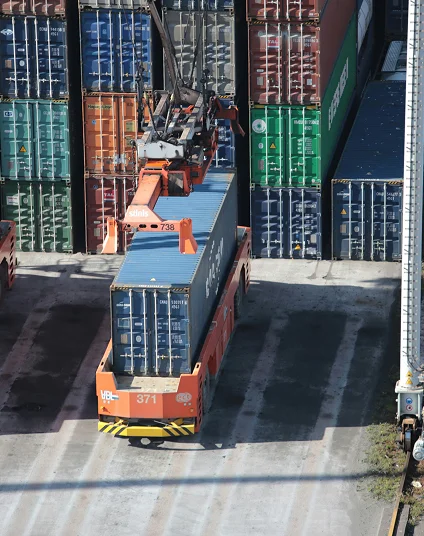
Industries We Support
Because each industry has different needs, we adapt our process:






Transit Times and Rates: What to Expect
Transit depends on collection time, border queues, cargo type, customs inspection and delivery restrictions. Therefore, the following figures should guide initial budgeting rather than replace a formal quotation.
Route | Approx. distance | FTL transit | LTL transit | Estimated cost range |
Bahrain → Doha | 380 km | 10–14 hours | 24–36 hours | USD 450–900 |
Riyadh → Doha | 500 km | 14–18 hours | 36–48 hours | USD 600–1,200 |
Dubai → Doha | 850 km | 22–28 hours | 48–72 hours | USD 950–1,800 |
Abu Dhabi → Doha | 780 km | 20–26 hours | 44–64 hours | USD 900–1,700 |
Rates change with truck type, fuel costs, customs requirements, loading conditions and seasonal capacity. Additionally, reefer settings, DG compliance, waiting time and special permits may affect the final price.
Why Choose ALS TARGET Over Other GCC Trucking Companies?
ALS TARGET brings more than 15 years of logistics experience to regional freight planning. Furthermore, customers gain access to tracking updates, dedicated coordination, competitive route sourcing and drivers who understand GCC border procedures.
The company supports standard freight, specialised cargo and cross-border trucking GCC requirements through an approved transport network. Although fleet capacity changes with each route and load, ALS TARGET assigns suitable vehicles according to cargo dimensions, temperature requirements and regulatory status. Notably, customers should request current vehicle availability and certification records when booking controlled or contract-sensitive cargo.
Service factor | ALS TARGET | Generic freight forwarder |
GCC route knowledge | Practical regional corridor experience | May rely on third-party instructions |
Shipment visibility | Tracking updates and active coordination | Updates may remain limited |
Vehicle selection | FTL, LTL, reefer, flatbed and DG support | Often standard trailers only |
Customs support | Documentation and clearance coordination | Clearance may require another provider |
Customer contact | Dedicated shipment coordination | Shared service desk |
Final delivery | Door, warehouse and project-site planning | Border-to-border service may apply |
Reliable Road Freight into Doha Starts with Better Planning
Why Businesses Trust ALS TARGET for GCC Road Freight
Businesses choose ALS TARGET because we treat road freight as a managed supply-chain service, not a simple vehicle booking. Our team checks shipment details, selects an appropriate truck and prepares the route around border requirements.
Moreover, customers receive practical advice before collection. If an invoice lacks an HS code or a certificate needs legalisation, our coordinators raise the issue early. This approach reduces avoidable waiting time and protects delivery commitments.
Another importer came to our team after a delay of a previous load occurred as the invoice detailed machinery differently from what was shown on the packing list. We aligned the descriptions, ensured classification and arranged the next dispatch with the complete file. And so the replacement shipment passed through the route with much less trouble.
Our network also facilitates shipments from Bahrain, Saudi Arabia and the UAE as well as Kuwait & Oman. That way, the business will be able to manage numerous regional lanes through a single seasoned GCC road freight service provider.
Your Next Shipment Starts Here
Successful Bahrain to Qatar road freight depends on accurate documents, suitable equipment and close border coordination. While the route looks simple on a map, the Saudi transit leg and Qatar import process require experienced handling.
ALS TARGET is the one location for responsive freight forwarding Bahrain, customs support and tracking options along with customisable trucking services. As a result, defined over the road freight provider GCC would make it from pickup point to destination with more management for LTL consolidation or dedicated trailer.
To get a freight quote particular to your route, tell ALS TARGET about the measurements of your cargo such as weight, commodity and property address.
FAQs –GCC & Bahrain to Qatar Road Freight Service
The fastest conventional course is through Bahrain, across the King Fahd Causeway into Saudi Arabia and along the trip towards the Salwa–Abu Samra fringe and Doha. This transfer, in ideal traffic and customs circumstances, could take 10–14 hours by a dedicated truck on its own. Driver protocols and border inspections, however, could slow the schedule down.
A new FTL flow from Dubai to Doha typically takes 22–28 hours of regular road and border management. On the other hand, LTL freight takes 48–72 hours since it has to combine multiple cargoes. The delivery time will also be determined by customs inspections, Saudi transit formalities and weekend restrictions.
A commercial invoice, packing list, certificate of origin and CMR or road consignment note are needed for most commercial shipments. In addition, the importer or customs broker needs to submit the Qatar import declaration. Chemicals must have an MSDS, whilst food, medical products and controlled goods require product-specific permits or approvals.
Yes. For food, pharmaceutical and other temperature-sensitive shipments of goods, ALS TARGET can provide reefers & temp-controlled vehicles. You should display the necessary temperature range in your booking instructions prior to collection. In addition, shippers will have to prepare the handling instructions, product permits and any proof necessary to stay cold-chain compliant at border clearance.
FTL gives one shipment dedicated to the use of the truck, while LTL combines cargo from several customers. Therefore, FTL usually provides faster transit, lower handling risk and better control for large or urgent loads. LTL costs less for smaller consignments, although consolidation schedules can increase the overall transit time.
A range for an indicative FTL rate from Riyadh to Doha could be USD 600–1,200. But the ultimate price relies on collection region, kind of trailer, cargo weight, loading manner & customs requirement. Reefer, hazardous, over-dimensional or time-sensitive freight usually incurs extra equipment or compliance charges.
Yes. Customs documentation, declarations and border-clearance support for goods headed to Qatar are coordinated by ALS TARGET. The team scrutinises invoices, packing lists, origin certificates, HS codes and permits before being dispatched. This, in turn, means that early checks of the documents minimize mistakes, which otherwise lead to inspections and questions about valuation or fees for waiting at Abu Samra.
ALS TARGET caters FMCG, Construction, steel Healthcare Pharmaceuticals Oil & Gas Retail E-commerce and General Trading companies You are also retrofitted for arranging cold food, industrial machinery, chemicals and oversized project cargo business. Vehicle selection and documentation procedures are dictated by the product’s size, classification, temperature-range and delivery location.
Road freight is traditionally more economical than airfreight for larger or heavier goods and businesses that make regular deliveries between countries in the GCC. Trucking also offers direct pick-up and delivery without transfer to an airport facility at either end. There also remains for air freight movement of small high value or time-sensitive consignments where speed is the over-riding consideration versus cost.
ALS TARGET provides shipment tracking updates and can arrange GPS-enabled transport for suitable routes and vehicles. Tracking availability should be confirmed when booking because technology and reporting frequency may vary between vehicle operators. In addition, the coordination team communicates key milestones such as collection, border arrival, customs release and final delivery.
Qatar's major land-border entry to Saudi Arabia and the principal gateway for GCC road freight is Abu Samra. There, trucks complete immigration, security and customs procedures before heading toward Doha. So traffic jams, inspections or document errors or checks for restricted-goods at Abu Samra can lead to directly delayed delivery time.
Give ALS TARGET pickup address, delivery DOHA, cargo description HS code weight dimension pallet and preferred date of delivery. Include if the load requires refrigeration, flatbed or handling hazardous materials as well as customs clearances. With these details, the team is able to suggest a suitable truck and prepare an exact quote.